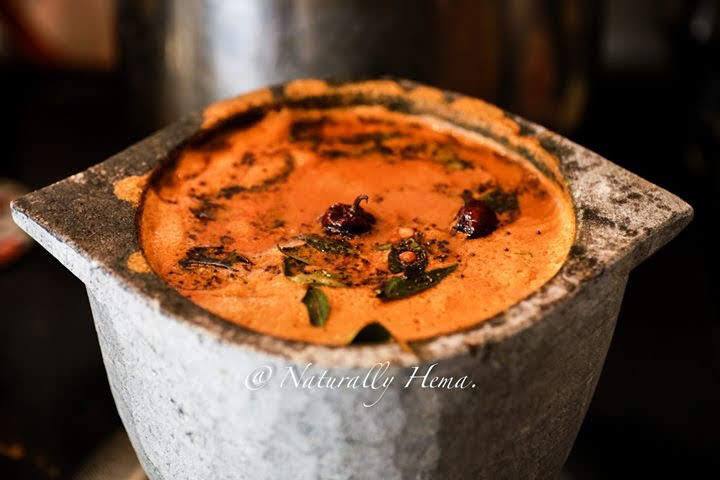
The sound of seasoning as it splatters on hot food was always music to my ears. “Chissssssss” went the seasoning of mustard and hing on to something delicious definitely I thought, as I turned the pages of my textbook waiting for the call for lunch. The seasoning had settled on the food, and the aroma of all the flavours rose from the kitchen. The hing struck first, followed by fried curry leaf in Gingely oil. Then came the tart but sweet smell of tamarind, and I think it is mango in the background. Oh yes! It is Sambhar. Yes I could identify all that and more while I was supposed to be studying science from my textbook.
“Hema set the table” said Appa from the dining room. It was the sambhar that was calling me, more than my dad’s diction. I threw my books aside and ran towards the kitchen to grab the plates. My mom was just coming out of the kitchen with her Kalchatti ( Vessel made of soapstone) full of sambhar holding it carefully with a cloth on both sides. I waved the curtain aside and rushed in to the kitchen and before I could stop myself I had a head on collision with the Sambhar in mom’s hands. Hot sambhar spilled on her hands, making her loose her grip.
We both saw the kalchatti slip from my mom’s hands and sambhar fill the floor with a cracking noise that followed. My dad closed his newspaper to see the lunch of the day served on the floor. He got up from his green metal chair to see the drama that was unfolding. I stood in shock trying to comprehend what had happened, with a sorry face. My mom watched in dismay with so many un answered questions flooding her in one shot I would presume. Her precious vessel she had been using for more than a decade is no more. What is it for lunch now ? &^%* am I supposed to cook again ? Where do I start to clean up this mess. Overwhelmed with these thoughts I presume she forgot to scold me ;-). I was 11 years old. My love for my mom and sambhar is still the same..
I learned two things from that incident. The first – My nose is always right. Two – I always run in the direction of food.
Soapstone is a naturally occurring, dense yet soft stone that is composed largely of the mineral talc and is very rich in magnesium. The discovery of soapstone is what got us from the stone age to the bronze age as they discovered that the stone could be carved to make moulds, for casting blades and knifes. This also helped mankind realise that the stone can absorb and retain heat for a longer period of time, which led them to make vessels for cooking, cooking slabs and bowls from it. Do you know what else was carved out of a soapstone? The outer layers of the Christ the Redeemer sculpture in Rio de Janeiro.

Soapstone is one of the easiest rocks to be quarried as it is easily exposed to the surface. It is mostly grey, green or brownish in colour. Its name is derived from its “soapy” feel and softness. The soapstone is cut into blocks and the blocks are carved in to the shape we need using a chisel. As the carved rock is soaked in water for a few days, letting the talc inside the rocks to escape making it easier to carve. The second round of carving is done to give it a smooth finish for the vessel. This cook wear is light grey in colour. This needs to be seasoned to decrease its porosity. Scroll down for how to cure a soapstone vessel.
SOAPSTONE DISH – KALCHATTI
Soapstone which entered the kitchen 8000 years ago is still valued for its remarkable properties of retaining heat and slow heating. Anything can me made on a soapstone except deep frying. It cooks food evenly slowly by distributing the heat all over. Helps in slow cooking because of its heat retaining capabilities. It can be used for slow fermentation of curd too. I grabbed one of my own kalchatti’s from a vendor who’s family was into it for the past two decades in Palghat, Kerala.
Here is how to cure it before using -Apply a generous amount of castor oil and turmeric all over the vessel in and out and leave it to dry for a day. The oil gets absorbed and the vessel will look dry the next day. Fill the vessel with cold water and set it on the stove on low heat till the water comes to boil. Repeat this process for a few days and discarding the water every time. All this effort is to cover the pores and avoid talc from the stone in mixing with food. In a few days in to seasoning we will see all the talc wear off and the vessel will have a smooth non stick finish, showing the natural marbling of the stone in a deeper dark colour.

WHERE TO BUY KALCHATTI SOAPSTONE VESSEL ?
 Naturally Hema